

Hot Spots Can Spread Fast: What Every Pet Owner Should Know
A small red patch on your dog’s skin can become a large, painful sore within hours. Hot spots, also called acute moist dermatitis, develop when repeated licking, chewing, or scratching damages the skin and creates a warm, moist area where bacteria can multiply.
Below, VetExpress Animal Urgent Care in Richmond, Texas, explains how to recognize hot spots and why prompt treatment matters.
What Does a Hot Spot Look Like?
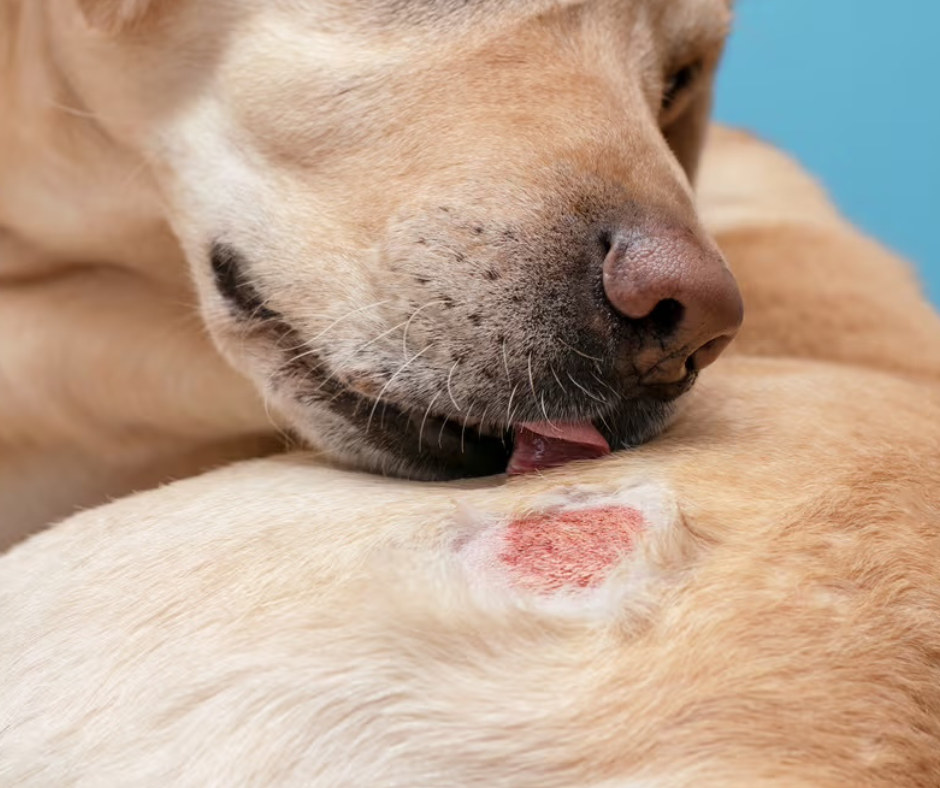
Hot spots are inflamed skin lesions that may appear red, wet, raw, or crusted. They can ooze, smell unpleasant, and cause significant itching or pain. Although they can occur anywhere, they are often found on the head, neck, hips, or legs. Thick or matted fur may hide the area until it has already grown.
Dogs are affected most often, but cats can develop similar lesions. Watch for repeated licking, chewing, scratching, restlessness, or sensitivity when the area is touched.
Why Do Hot Spots Spread So Quickly?
Hot spots generally do not spread from one pet to another. Instead, the lesion expands because the pet continues traumatizing the skin. Scratching causes more irritation, leading to more itching and scratching.
Common triggers include:
- Fleas or other insect bites
- Environmental or food allergies
- Ear infections
- Moisture trapped beneath thick or matted fur
- Skin wounds or irritation
- Anal gland problems
Warm, humid weather and swimming can increase the risk, especially when a pet’s coat remains damp.
Why Is Early Veterinary Treatment Important?
Prompt care can stop the itch-scratch cycle, relieve discomfort, and reduce the risk of a deeper skin infection. Treatment depends on the severity and underlying cause. A veterinarian may clip the surrounding fur, clean and dry the lesion, provide medication for itching or pain, and treat a bacterial infection when present.
Avoid applying human creams, peroxide, alcohol, or other products unless a veterinarian recommends them. Some substances can further irritate damaged skin, and licking may make certain products unsafe.
When Should Your Pet See a Veterinarian?
Seek veterinary care when a hot spot is rapidly enlarging, painful, producing pus or a strong odor, or accompanied by lethargy or reduced appetite. Your pet should also be evaluated if the lesions keep returning, since recurring hot spots may indicate allergies, parasites, an ear infection, or another underlying condition.
If your pet develops a painful or rapidly worsening skin lesion outside your regular veterinarian’s hours, VetExpress Animal Urgent Care can provide prompt evaluation and treatment. Our customized treatment plans, surgical procedures, and aftercare support are always delivered with compassion and a full understanding of your pet’s medical history. Your emergency is our top priority. If your pet is in need in Richmond or the surrounding areas, including Rosenberg, Sugar Land, Missouri City, or Katy, we’re here to help. Contact us to schedule an appointment today!


